Design Size, Resolution and Dots Per Inch for the AM.CO.ZA InkRIP Software (Part 3)


inkrip design size resolution
Have you ever printed a design, and found that the final design looks blurry or poor quality.
When it comes to addressing and fixing this problem, we are going to have to dive into your design’s resolution and dpi.
This video is part of a Mini-Series.
The next video covers Design Elements.
The previous video covered RGB vs CMYK.
Video Transcript
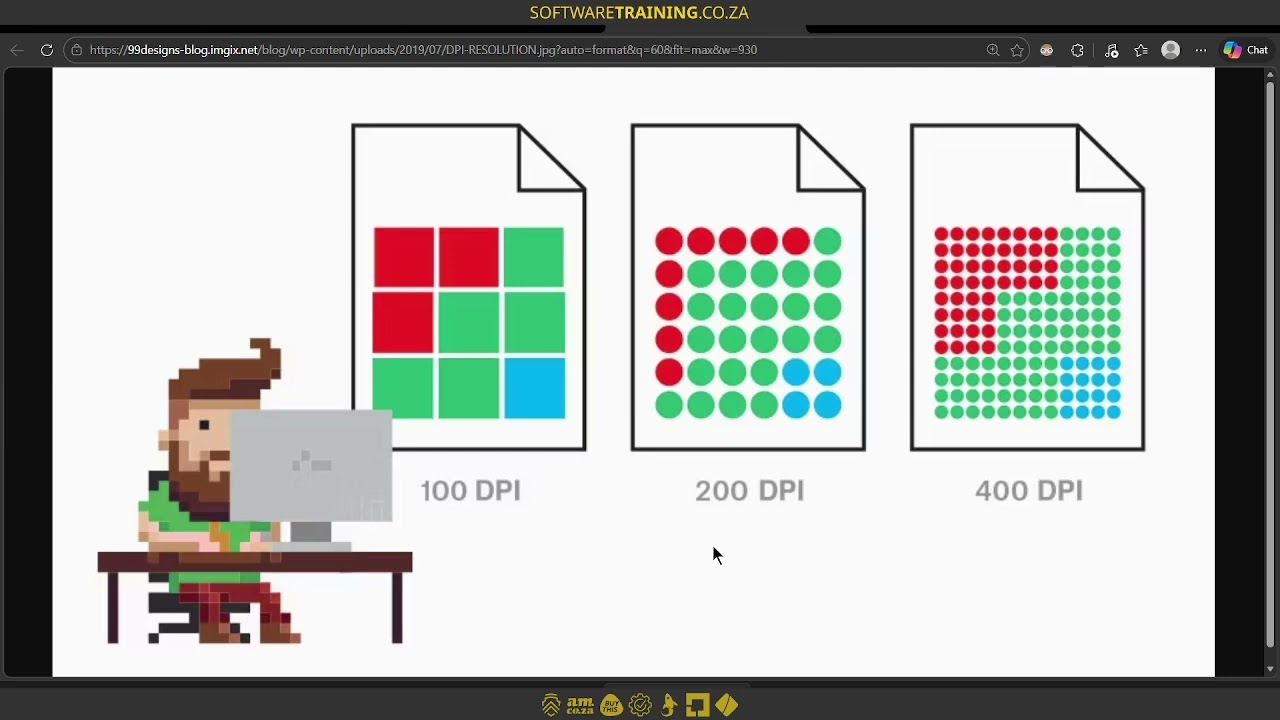
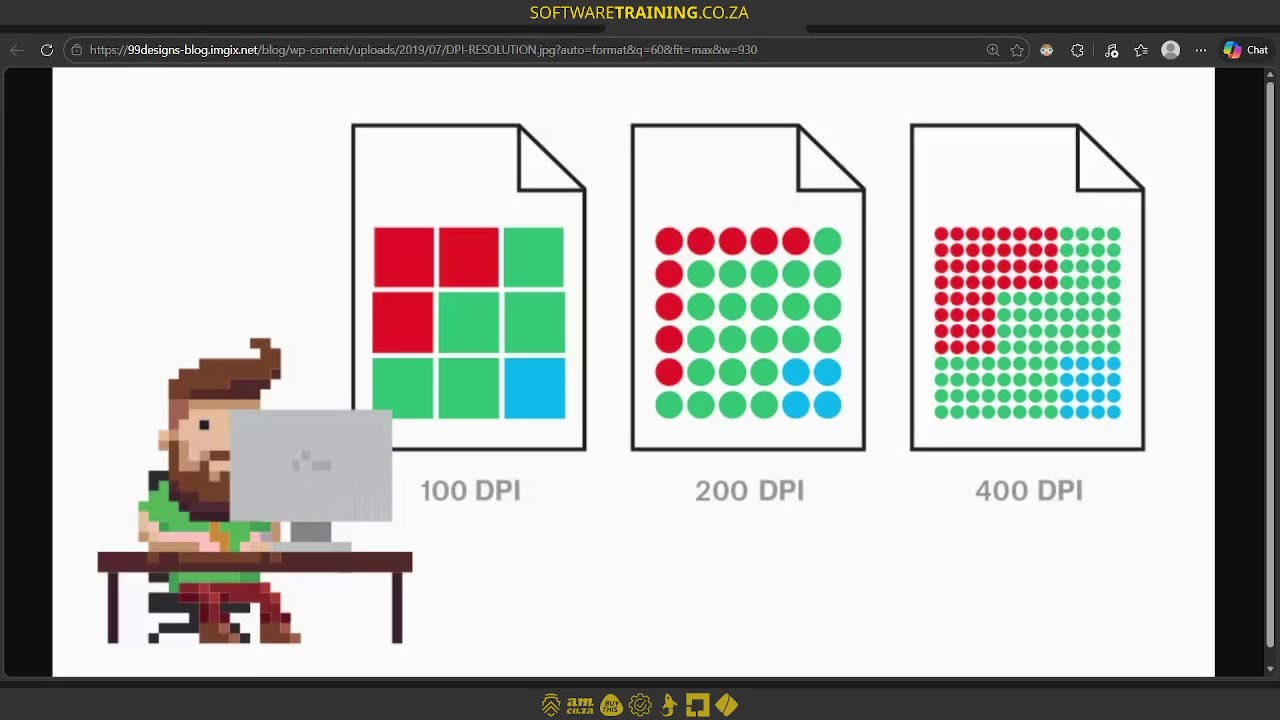
Howdy, guys. In today's video, we're gonna be looking at scale and DPI for actual print. But before that, let's have a quick intro first. So, today's video can be found on softwaretraining.co.za. We make short and easy to watch problem-solving videos, and we also have daily updates. Now, when it comes to actual DPI or resolution, this is, um, I'm gonna say there's two sides to this. So, the one side is the actual resolution, so this will be the scale of the image versus a form of pixel base, normally, it could be a measurement as well, but this is gonna be very important in print. So, if the client or whatever, you wanna print something a certain size, maybe 10 centimetres or 10 centimetres. Then it's very important to make sure when you're making that design that you're at least doing it that size. Now, you can make it bigger and kind of scale down. I always recommend that versus creating something too small and scaling it up, because if you scale something up, you always lose quality. You can maybe with AI try to fix it, but it's never the original in the sense of, you know, the colours and so forth. They can start varying once they upscale it. Now, when you've designed it slightly bigger, you can scale it down and then you can, um, but you have a higher quality version of that. So, that is quite important. Now, when it comes to actual DPI, what this comes down to its dots per inch or sometimes also kind of droplets per inch. So, how much or how many droplets does it put down in an inch. Now, when it comes to printing with multiple heads and so forth, sometimes it's, it's not that relevant anymore. It is more important just that you have a very high resolution because what happens is you can go multiple passes. And it will put the droplets in between other ones, so it kind of staggers it, so the quality still stays high. But uh good design practises still try to work with a high resolution, at least high enough because obviously the higher you go, your file is gonna get bigger, your computer is gonna uh slow down and things like that. And also try at least create with the right res uh DPI. Now, the general rule of thumb is if you're gonna be viewing something close, maybe like a a picture or, you know, a magazine or something like that, then you can easily go from 150 to 300 DPI. That's, you know, that's good quality stuff there. And then, if you're gonna be at like a medium view, maybe a banner, vehicle graphic or something like that, you can easily go to about 75 to 150 DPI. And then distant things like bull boards and building wraps, you'll see they often go from 20 to 50 DPI because you're never gonna be that close where you see it pixelates. Cause that is the thing. If your resolution or your DPI is too low. It's gonna start getting, making the image muddy and seem like it's low quality pixelated, a little bit like this guy over here. So, now, here, we also have a nice little example of 100 dots per inch, 200, 400, so you get the idea of it's pretty much gonna be putting more dots within that inch, which in essence, is gonna up the quality, so it's gonna make the image look way better. But yeah, otherwise, that is it on resolution and DPI or scale and DPI. Um, it's a very important factor when it comes to printing, so just keep that in mind. But yeah, otherwise, in the meanwhile, though, if we head here to softwaretraining.co.za. za, you guys will notice we've got a variety of different softwares we do cover, and you can also isolate your search on the top right. If you do not, however, find the training videos you're looking for, just simply go here on the left, request the training video, and then we'll do our best to try and make that for you. But otherwise, thanks guys for watching and cheers.

 allef-vinicius-oQKt5Ky6GVw-unsplash-index